


search
date/time

Fri, 7:00AM
moderate rain
8.7°C
NE 12mph
moderate rain
8.7°C
NE 12mph
 | Sunrise | 6:53AM |
| Sunset | 4:56PM |  |
P.ublished 22nd August 2026
nature
Chester Zoo Python Beats Cancer In World-First Treatment
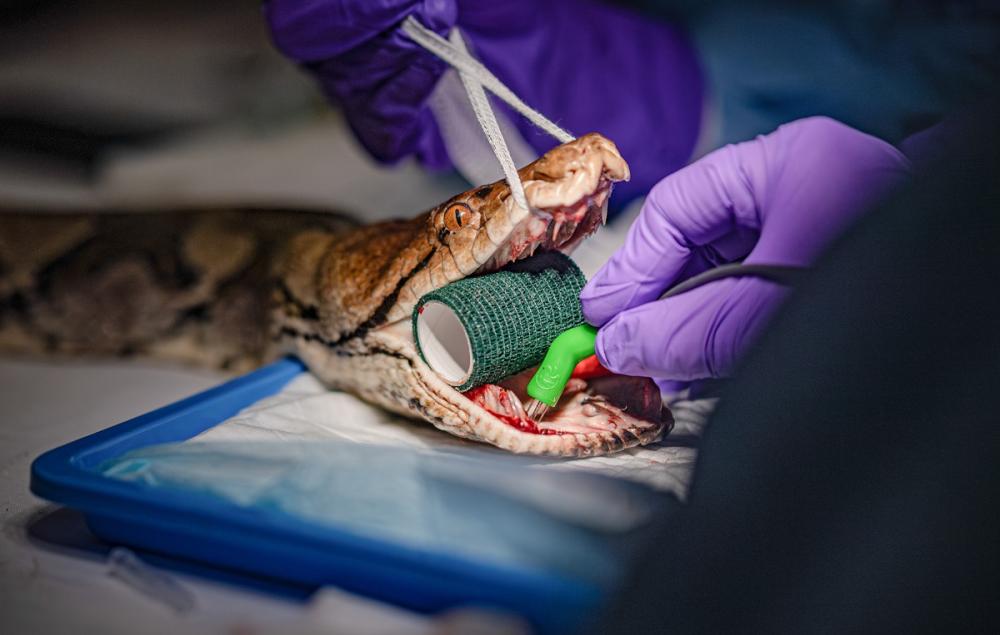
World-first’ cancer treatment saves python after tumour destroys part of her jaw
Photo: Chester Zoo©
A 15-foot python at Chester Zoo is back to being "bright and feisty" after becoming, as far as anyone can tell, the first snake in the world to be treated with a pioneering cancer therapy more commonly used on people.
Jodie Foster — the 40kg reticulated python named, rather charmingly, after the Oscar-winning actress — developed a fibrosarcoma in her jaw that returned after initial surgery and began eating into the bone itself. It was here that the story took an unexpected turn: rather than simply operate again, the zoo's veterinary team joined forces with cancer specialists at the University of Liverpool to try something that had never been attempted in a snake before.
Keepers first noticed something was wrong when Jodie began eating less and lying unusually still in her habitat. Tests confirmed the malignant tumour, and although vets removed it, its return left the team facing a stark choice.
.jpg)
World-first’ cancer treatment saves python after tumour destroys part of her jaw
Photo: Chester Zoo©
There was, of course, no operating table built with a 15-foot python in mind. Keepers and vets simply improvised, pushing two tables together to create something closer to the size of a double bed, with heated blankets and warmed air keeping Jodie's temperature stable throughout.
Ashpole first carried out a hemi-mandibulectomy, removing the diseased section of jawbone, before administering electrochemotherapy to mop up any remaining cancerous cells. The treatment pairs the drug bleomycin with carefully controlled electrical pulses, which temporarily open up cancer cells so the drug can work more effectively — often allowing the whole procedure to be completed in one sitting, at a lower dose than conventional chemotherapy would require.
Jose Alvarez Picornell of the University of Liverpool's Department of Small Animal Clinical Science called the collaboration a career highlight, adding that the pair intend to publish the details formally so that veterinary colleagues elsewhere can learn from the approach.
Chester Zoo©
"A few months ago, we genuinely didn't know whether she'd survive," said Ashpole. "Now she's eating normally, exploring her habitat and behaving exactly as we'd hope."
It is, he reflected, a job with few dull moments. "One day we're treating a tiny frog that weighs just a few grams, the next we're carrying a 15-foot python into theatre. That's what makes this job so interesting and fun." Jodie, for her part, seems entirely unbothered by her place in veterinary history.
The shortened address for this article is: newspub.uk/120op