


search
date/time

Sat, 4:00AM
clear sky
11.4°C
WNW 8mph
clear sky
11.4°C
WNW 8mph
 | Sunrise | 6:16AM |
| Sunset | 5:43PM |  |

Andrew Palmer
Group Editor
P.ublished 3rd October 2026
arts
Review
Classical Music: Franck Quintet Enescu Octet
Twin peaks of chamber music ambition
César Franck Piano Quintet in F minor Enescu Octet for Strings in C Major, Op. 7
James Ehnes, violin; Amy Schwartz Moretti, violin; Grace Park, violin; Jun Iwasaki, violin; Che-Yen Chen, viola; Milena Pajaro-van de Stadt, viola; Edward Arron, cello; Bion Tsang, cello. Inon Barnatan, piano;
Seattle Chamber Music Society SCMS 003
seattlechambermusic.org
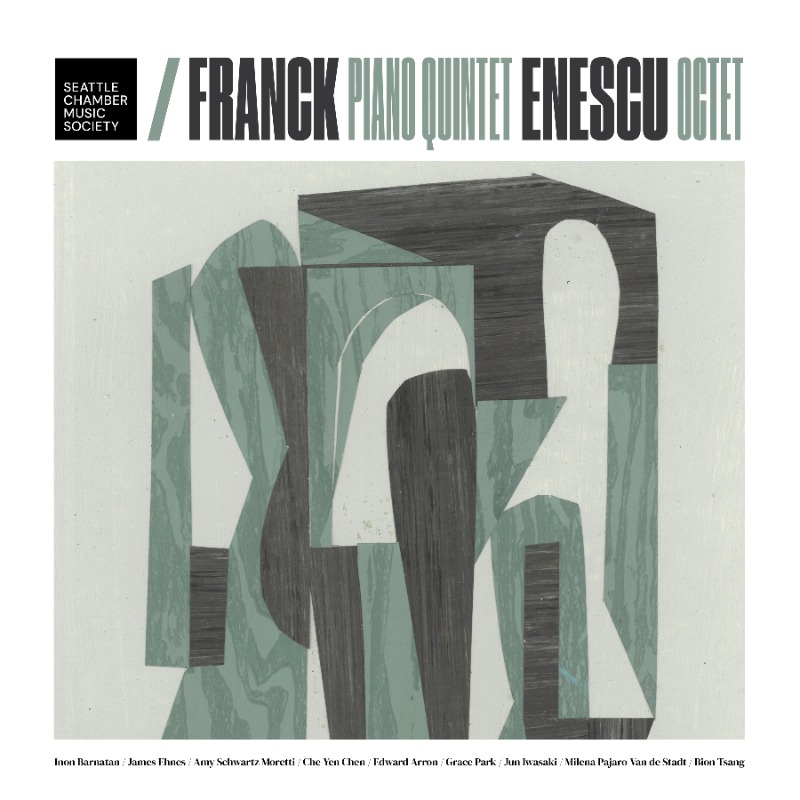
From the opening bars of the Franck, the emotional temperature is high. Ehnes is joined by pianist Inon Barnatan, violinist Amy Schwartz Moretti, violist Che-Yen Chen and cellist Edward Arron, and together they deliver a reading of rich textures and real character that goes straight to the heart of the work. When the quintet was first heard in Paris in 1880, its fervour unsettled more than a few listeners, and it is easy to hear why. The first movement runs for some 15 minutes without any let-up in its drama, rising through a tremendous crescendo in its closing pages before subsiding once more. The dynamics and phrasing of each player are a delight, the piano part is brilliantly handled, and there is a shared concentration on rhythmic clarity throughout.
The Lento sings. Barnatan's playing is lovely, every line is shaped with care, and the balance between the parts has a glowing warmth. There is a sensuality, too, in those low cello notes set against the piano. The finale opens atmospherically, the tremolo string ostinatos and dark piano writing set an unsettled mood, and the shifts in dynamics are superbly judged. The considerable technical demands are dispatched with ease, the balance is first-class, and the tension holds until the very last seconds. An absorbing performance.
For Enescu's Octet, Ehnes, Moretti, Chen and Arron are joined by violinists Grace Park and Jun Iwasaki, violist Milena Pájaro-van de Stadt and cellist Bion Tsang. Enescu was just 18 when he embarked on the work, and its sheer audacity remains astonishing: the material of its opening bars is reworked, reshaped and reimagined across four movements played without a break, and it asks a great deal of every one of the eight players.
Here the musicians' chemistry is plain to hear. As in the Franck, no detail goes unnoticed, and the changing textures and moods are vividly conveyed. The second movement, marked Très fougueux (very fiery), lives up to its billing, the ensemble's virtuosity firing on all cylinders before the music sinks to a hushed close in which you hardly dare breathe.
The Lentement is captivating. Every dynamic is precisely placed, its poetry communicated with skill and care, and Ehnes's melodic lines soar above the texture. Towards the end, a delicate pizzicato accompaniment and the gathering weight of the low cellos lead without a break into the closing waltz, a transition managed so smoothly that you barely notice the join.
Franck was in his late fifties when he wrote his quintet; Enescu barely out of school. On this evidence, experience and youthful daring make for equally thrilling listening when played with such panache.
Also by Andrew Palmer...
Classical Music: Requiem Da Camera, For St Cecilia & In Terra Pax Classical Music: Granville Bantock Orchestral WorksClassical Music: Ralph Vaughan Williams From Ursula, With LoveIlkley Literature Festival Opens With A Strong Yorkshire AccentLandsec Swoops For Metrocentre In £516m DealThe shortened address for this article is: newspub.uk/1214m