


search
date/time

Tue, 1:00AM
scattered clouds
11.6°C
ESE 6mph
scattered clouds
11.6°C
ESE 6mph
 | Sunrise | 6:46AM |
| Sunset | 5:05PM |  |
P.ublished 28th September 2026
frontpage
Half Of Teen Girls Avoid School Sport Out Of Fear Of Failure
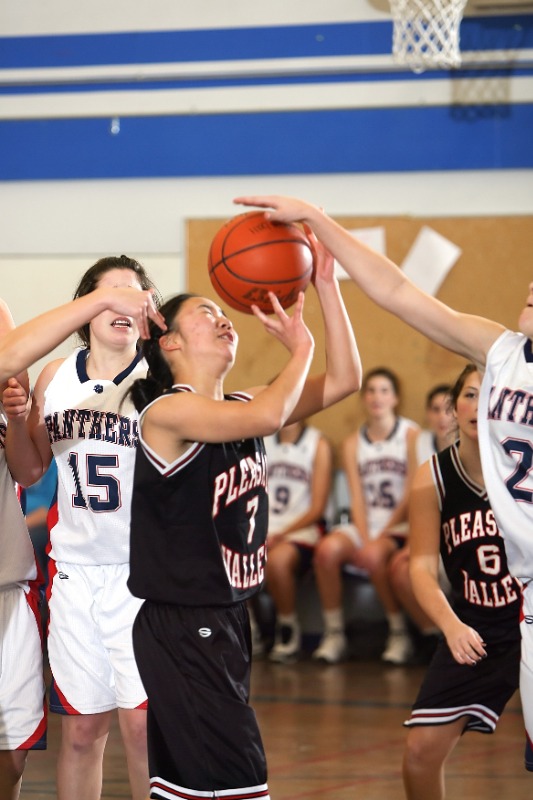
Image by Keith Johnston from Pixabay
Polling of 15-year-olds for the Centre for Social Justice (CSJ) finds that more than one in five girls (21 per cent) now spends no evenings out with friends during a typical week, compared with one in six boys (16.6 per cent).
Among both girls and boys, the share has risen by around 50 per cent since 2002.
Girls are 30 per cent more likely to spend no more than a single evening a week out with friends than boys.
Girls are also granted the freedom of being allowed out alone at a later age than boys on average – 11.24 years, compared with 10.54 years for boys.
The report warns that as face-to-face socialising and activity has diminished, bedrooms and screens have increasingly become the default setting for teenage life.
“Since I got my new phone I don’t want to come out my bedroom, and I’ve been more short-tempered and not feeling as energetic and active as I used to be. I keep losing track of the time and getting distracted.”
More than half of girls cite cost as a barrier to spending more time with friends, one third say there is nowhere nearby they want to go and almost one in four cite feeling unsafe.
Almost two in five (39 per cent) of girls say they hardly ever leave their bedroom except to attend school, compared with 35 per cent of boys – equivalent to over 250,000 15-year-olds in total across England.
One in four (25 per cent) now spends at least six waking hours there on a normal weekend day, compared to one in five (21 per cent) boys.
The report, Inactive Nation: Getting England’s teenagers moving, finds that sedentary screen time has filled the space once occupied by outdoor hobbies, independent activity and face-to-face friendships.
Three quarters of all 15-year-olds say they often use phones or screens because they have nothing else to do, while nearly half say they spend more time in their bedroom than they would like.
The CSJ argues that sport and physical activity can provide one of the clearest routes out of this cycle – providing the mental health benefits of exercise, the resilience needed for employment, as well as role models and friends.
But for many girls, school sport is failing to perform that role. Half of girls say they sometimes avoid school sport because they worry they will not be good enough, compared with 38 per cent of boys.
Girls are also less likely than boys to say their school offers a sport or physical activity they enjoy – 70 per cent compared with 81 per cent. Seven in ten girls say they would be more active if there was a wider mix of sport activities at school, with opportunities to have fun rather than compete.
Too many teenage girls are retreating into their bedrooms and onto screens while the independence that should be part of coming of age slips away. The answer is not just to restrict social media, but to put something better in its place.
Sport and physical activity are good for our health, our resilience and for the friends we make along the way, so it’s no wonder it’s been described as a miracle cure. We need to get England’s teenagers moving again.
The findings come amid worrying trends in teenage physical activity. The CSJ estimates there are now nearly 100,000 more completely inactive 11 to 16-year-olds than in 2018, while a survey in 2025 found that one in ten secondary-school girls do no physical activity whatsoever.
Replacing just 15 minutes of a 14-year-old’s sedentary time with physical activity is associated with better health and higher self-esteem, while nine in ten teachers believe being active improves pupils’ behaviour and schoolwork.
A new Right to Sport, ensuring every secondary school pupil receives two hours of PE plus two hours of extracurricular sport or physical activity each week – levelling the playing field between state and independent sectors and helping pupils find new hobbies, build friendships and spend time away from screens.
More ‘give it a go’ type opportunities for lower-pressure physical activity in school lunchtimes, alongside the traditional offer of sports teams.
A new Sport on Prescription approach, connecting struggling pupils with physical activity clubs as part of mental-health support in schools.
Greater access to school sports facilities outside school hours and activity-club vouchers for Year 9 pupils.
This summer, Prime Minister Andy Burnham declared himself “massive on school sport” and said expanding sport and the arts in schools would be “a feature of my time” in office.
This summer, Prime Minister Andy Burnham declared himself “massive on school sport” and said expanding sport and the arts in schools would be “a feature of my time” in office.
The shortened address for this article is: newspub.uk/1212p