


search
date/time

Fri, 10:00AM
light rain
9.5°C
8mph
light rain
9.5°C
8mph
 | Sunrise | 6:53AM |
| Sunset | 4:56PM |  |

Andrew Palmer
Group Editor
P.ublished 7th March 2026
travel
Oktoberfest: The Dream, The Drench, And The Detour
When a bucket list destination disappoints, Bavaria finds other ways to deliver
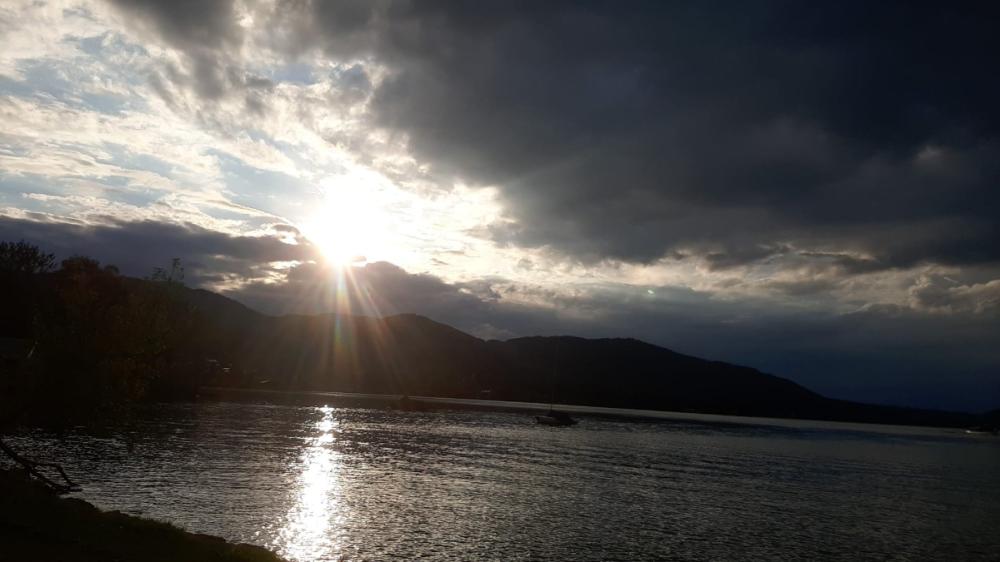
Lake Tergensee
There is something to be said for the places you stumble upon rather than plan for. The ones that catch you off guard, that ask nothing of you but your company, and give back far more than you bargained for. Tegernsee is one of those places — and I might never have found it at all had it not been for a busy Munich and the kindness of friends.
I had first encountered the city years earlier and found it, as Munich can be, rather overwhelming. My German friends—a couple I visit every year, for I am an unrepentant Germanophile—came to the rescue with a characteristically generous invitation: 'Come and stay with us at our holiday home in Tegernsee,' they said. And so I did. A resort spa town nestled in the Bavarian Alps, cradled by forested hillsides and laced with ski trails, toboggan runs and footpaths that wind their way above the shimmering lake — it could scarcely have offered a greater contrast to the city I had just left. Southeast, the Wallberg mountain is crowned by the Wallbergkircherl, a tiny church offering panoramic views across the valley. In town, the Olaf Gulbransson Museum quietly celebrates the work of the Norwegian satirical artist who made this corner of Bavaria his home. But it is the lake itself that commands your attention — the boats drifting lazily across the water, the satisfying plunk of a skimmed stone, and the distinctive light blue and white label of a Tegernseer Helles bier pressed cool into your hand. If you like a lager, this is emphatically for you. Here was the haven I had not known I was looking for.
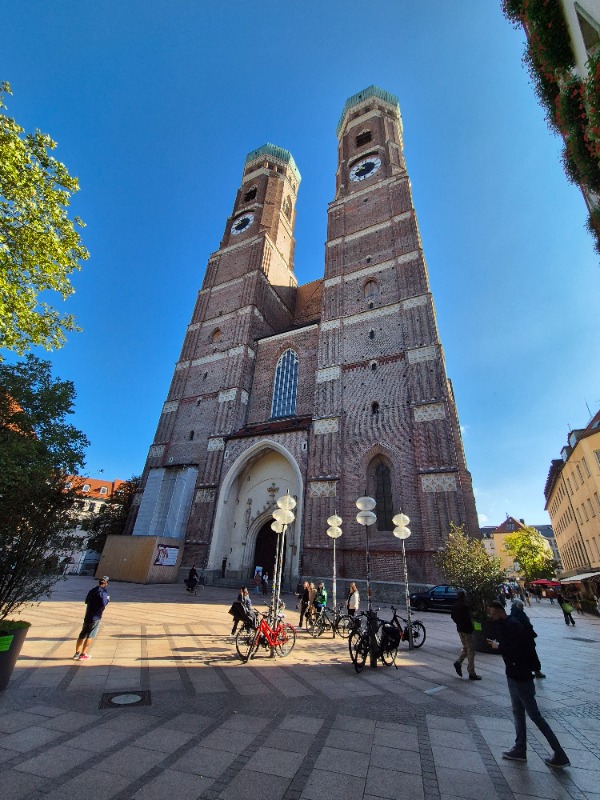
Munich bathed in sun
Photo: Graham Hermon
I visit Germany every year, staying with my closest friend and his wife in the north of the country, and my affection for it—its landscapes, its food, its beer, its wine—runs deep. And so, in the months before my sixtieth birthday, it seemed entirely natural to book a trip to the Theresienwiese in Munich for the real thing. Over six million visitors make the pilgrimage every autumn for traditional Bavarian food and bier, the full spectacle. On the day we arrived there were 300,000 people, and entry was carefully monitored. I had done my research. I thought I knew what to expect.
I did not know what to expect.
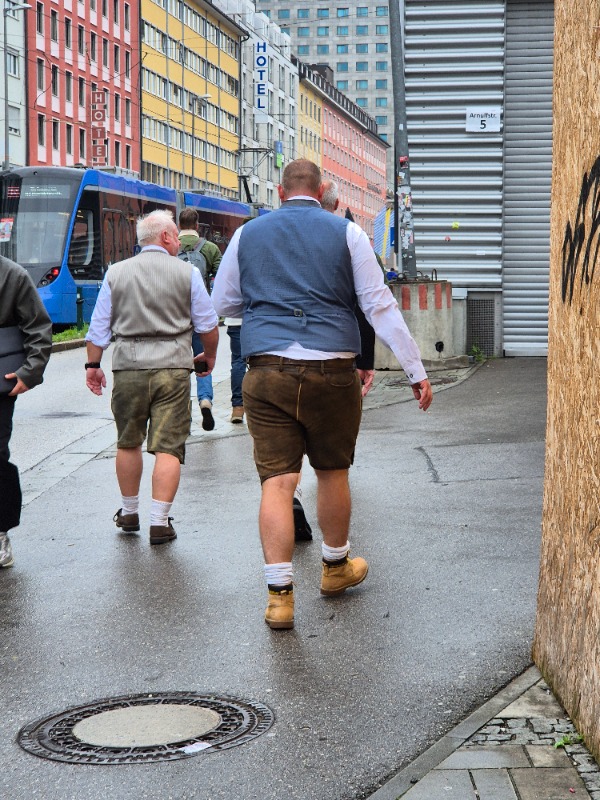
Following the lederhosen
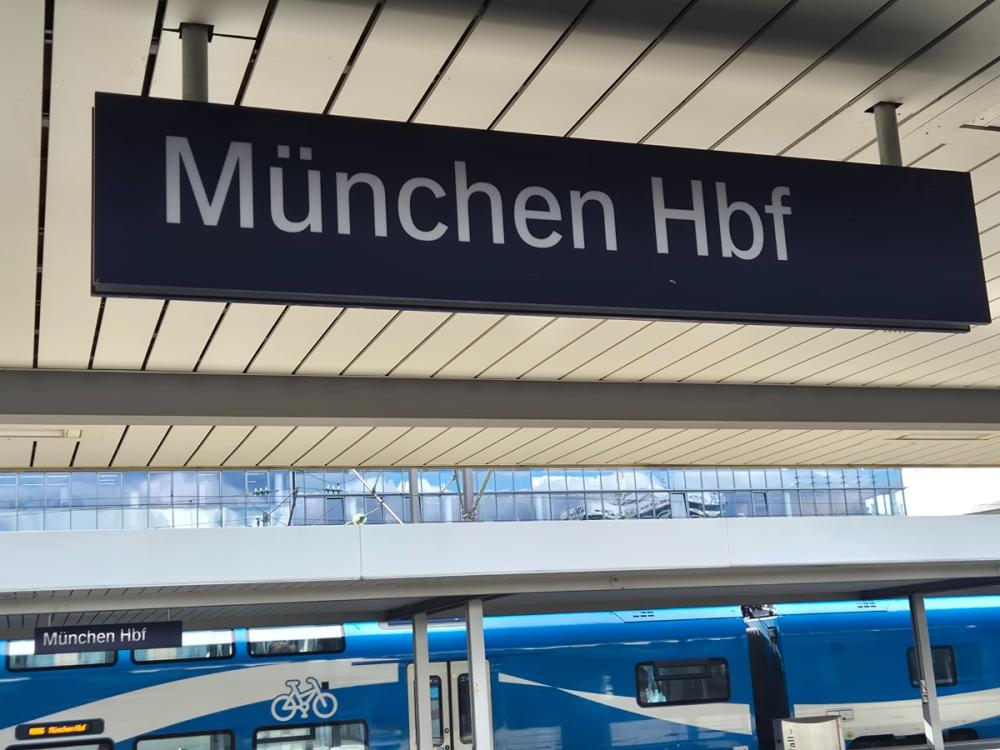
We arrived at the station, dropped our bags at a conveniently situated hotel and went looking for that biergarten from a decade or more ago. We did not find it. What we did find were plenty of people in lederhosen, German hats and the long traditional dirndl dresses that transform Munich in late September into something resembling a rather cheerful costume drama. Encouraged, we fell into step behind a trio of men who had the bearing of people who knew exactly where they were going. They were heading to a corporate event at a hotel bar — though, as it happened, only a stone's throw from the Theresienwiese, so we can count that as a modest navigational success.
As we approached the main entrance, the heavens opened. This, I told myself, was merely atmospheric. Suitably dampened, we pushed through into the festival — and I felt my face fall.
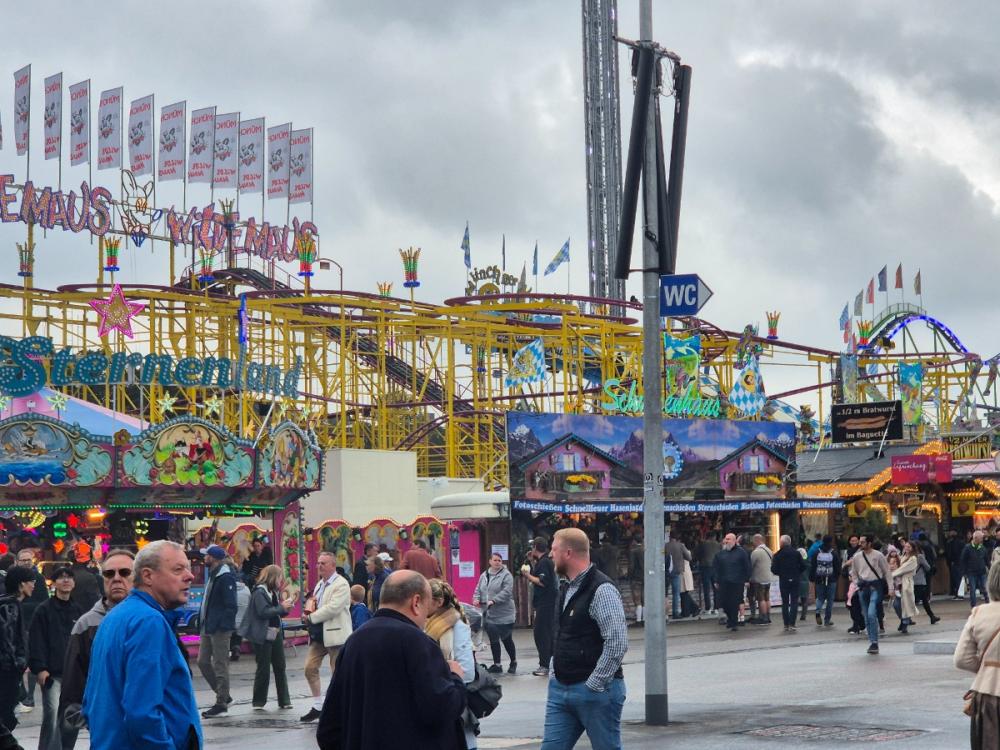
Funfair in the rain
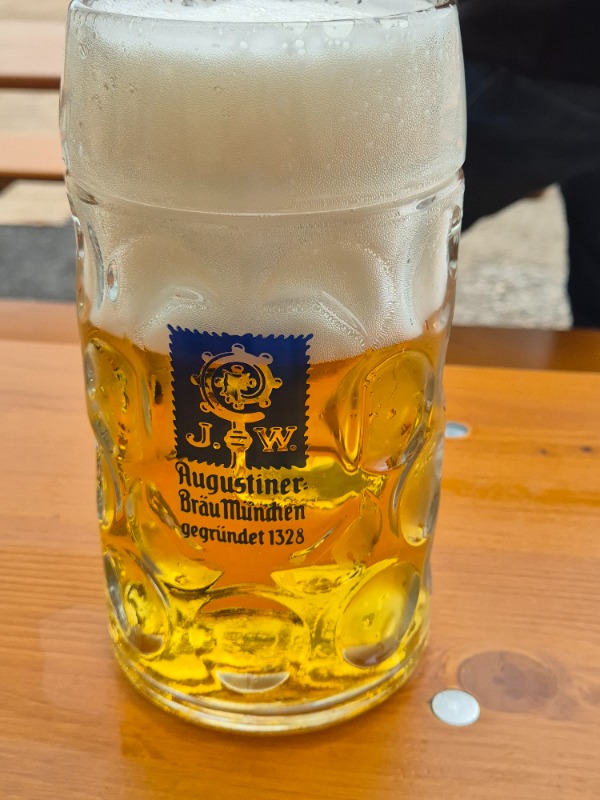
Prost!
We did, naturally, have a German sausage in a bun with that gloriously sweet mustard. Some things are non-negotiable. But this was not the biergarten of fond memory, and we left, making way for the next wave of arrivals.
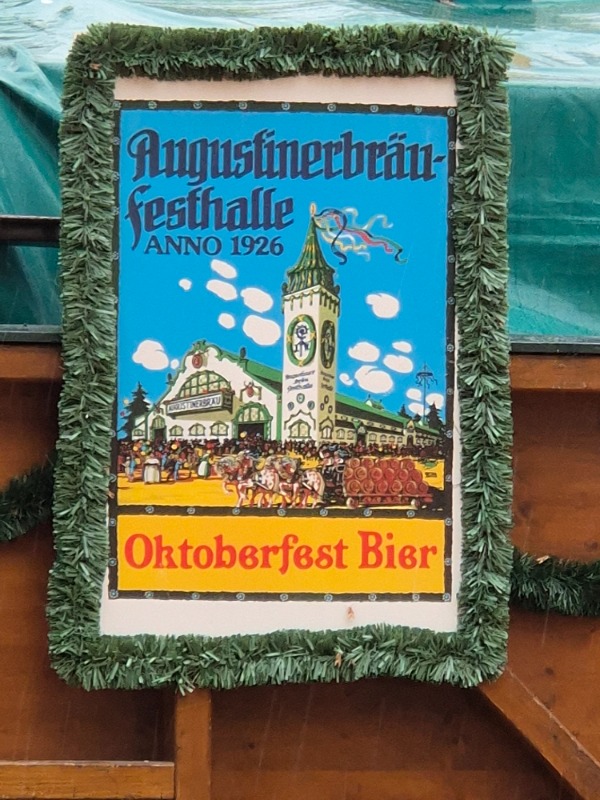
What we found instead was a small café, warm and inviting in the manner of somewhere that has no interest in impressing anyone. And here, in a detail that will surprise anyone who has wrestled with German coffee culture, I was able to order a coffee with oat milk. A pastry arrived. The rain began to ease. Through the window, pale sunlight was making tentative enquiries. We sat and let the disappointment dissolve.
Refreshed, we followed the crowd back towards the city by a different route — and it was here that Munich offered its first genuine gift of the trip. Rounding a corner, I felt a flicker of recognition. There, set back behind its chestnut trees, was the Augustiner-Keller: the very place I had visited all those years ago, the biergarten of sunlit memory, the origin of my confusion about what Oktoberfest was supposed to be. We went in.
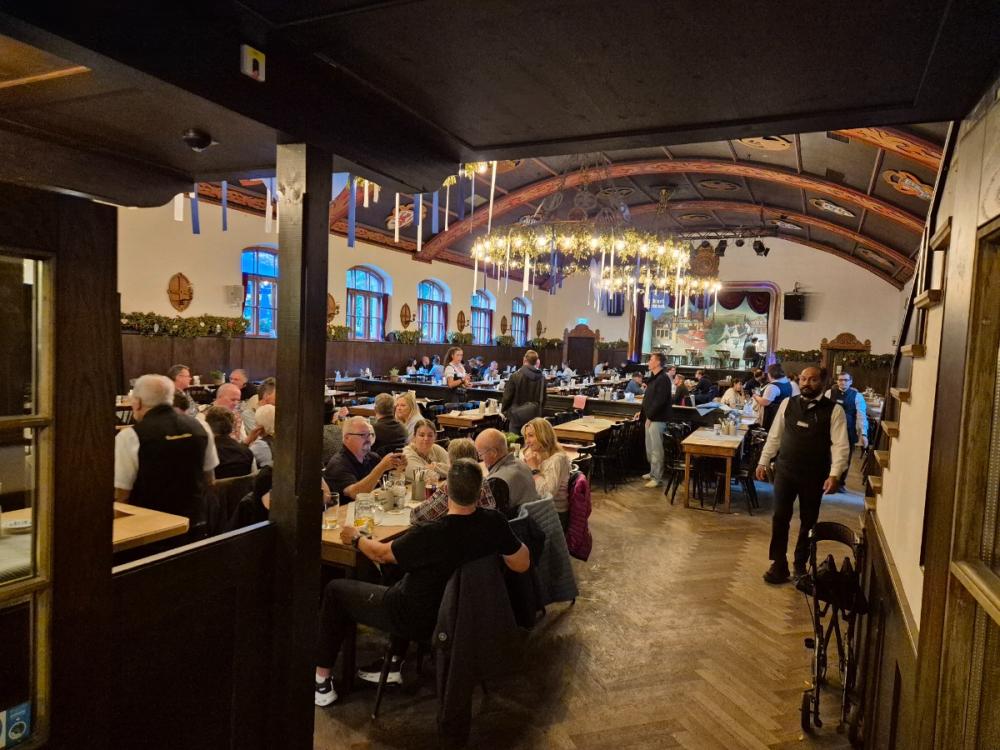
Conviviality reigns
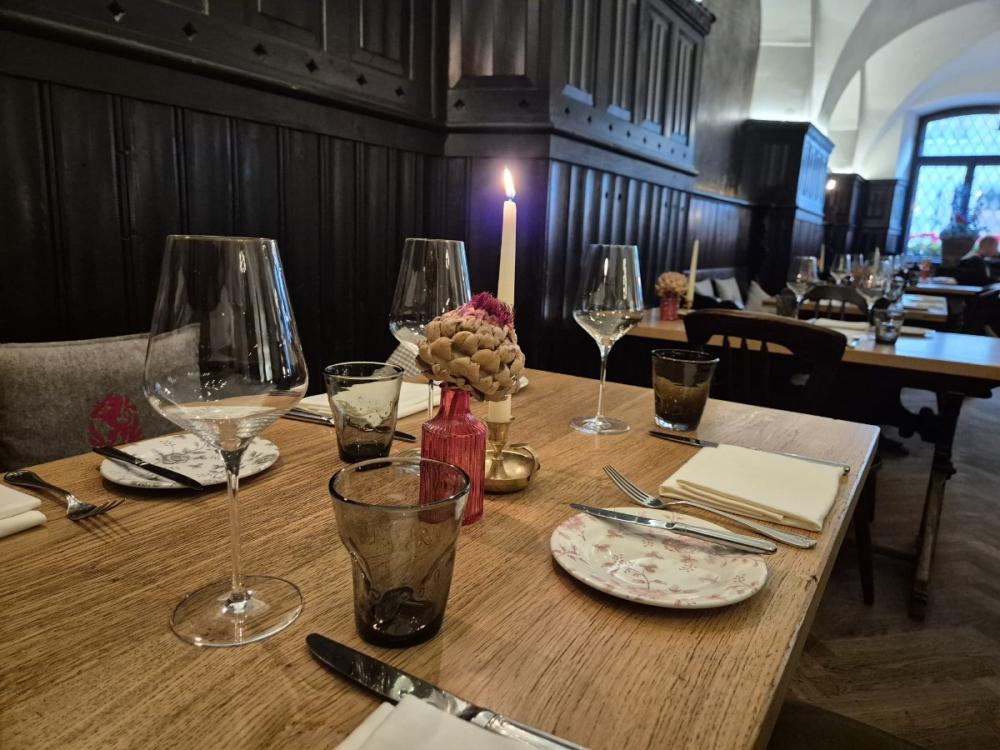
Ancient meets modern
That evening, I met up with the daughter of my closest friend Thomas Droßler, Elisabeth, and her partner Johannes — and Munich offered its second, and finest, redemption of the trip.
The Weinhaus Neuner is Munich's oldest wine house, and its reputation for hospitality, fine wines and exquisite cuisine stretches back more than a hundred and fifty years. It occupies a listed townhouse dating to the fifteenth century, owned by the Neuner family since 1864; they still reside on the upper floors, which lends the place a quality of lived-in continuity that no amount of interior design can manufacture. Renovated in 2016 under the direction of Fabrice Kieffer and Christian Schretzelmeier and brought to new culinary life by host and sommelier Frank Gluer and head chef Benjamin Kunz, it combines Alpine and Alsatian cuisine in a manner that is thoroughly modern without ever being showy.
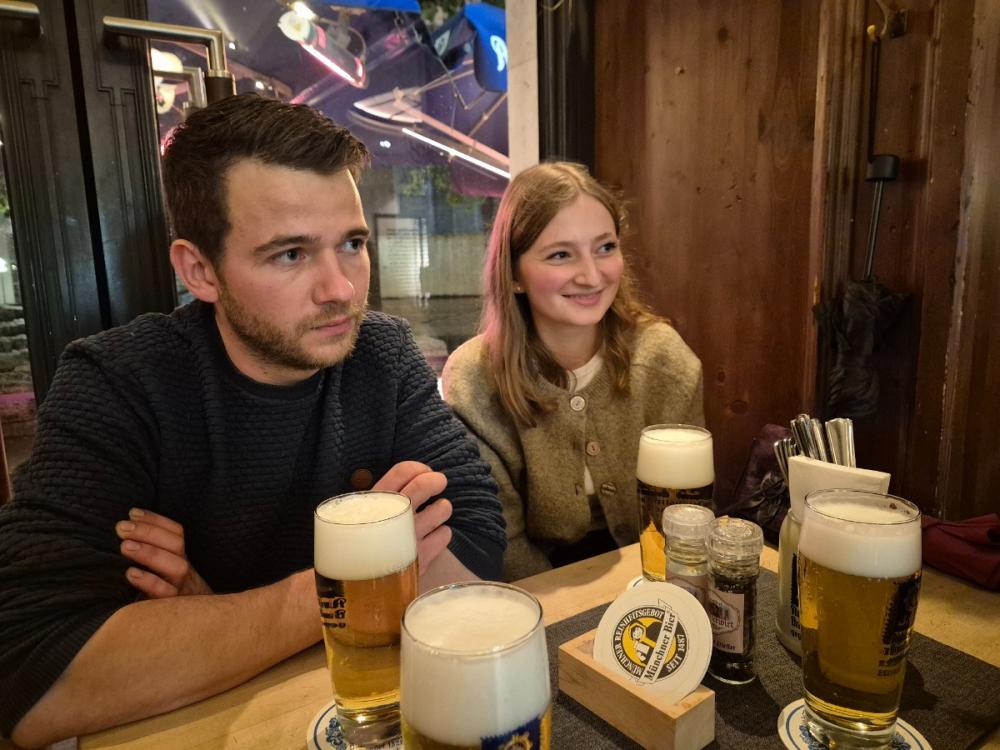
Good Company: Johannes & Elisabeth
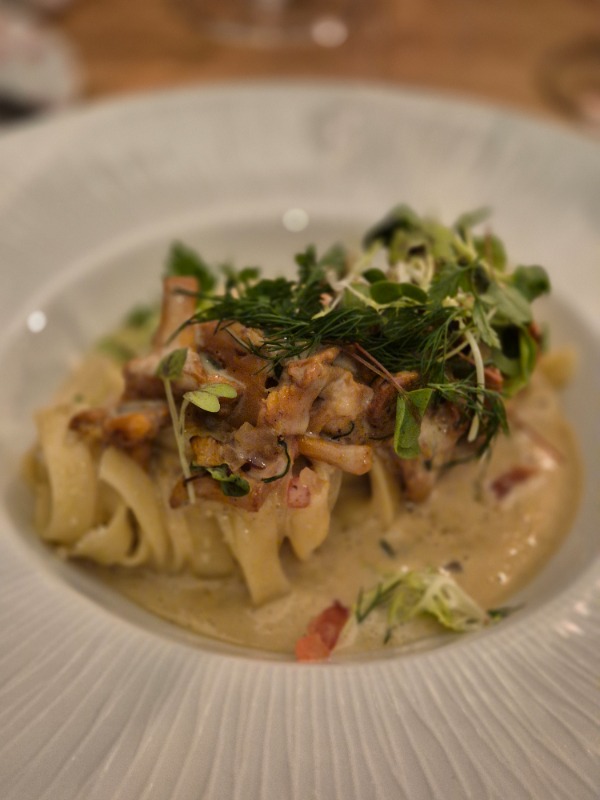
A light and tasty starter
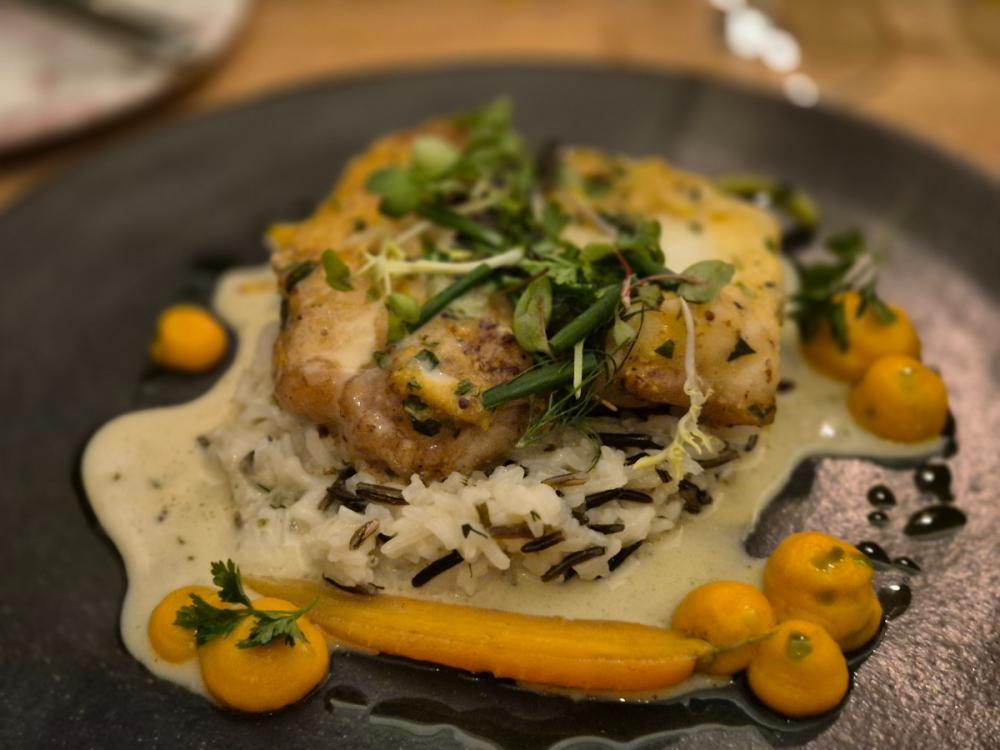
Monkfish
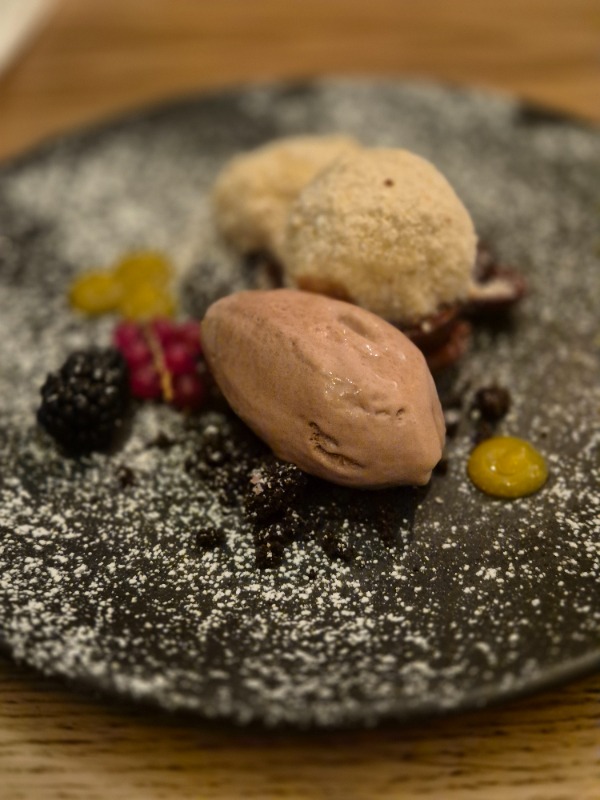
A desert to die for
For my main course I had the glazed monkfish medallions with carrot rice, Pommery mustard and thyme beurre blanc — delicate cooking, the flavours fused with real subtlety. The specials board was an additional temptation that required considerable willpower to resist. Desserts were unapologetically regional: a Sachertorte with apricot; homemade curd cheese dumplings with stewed plums and chocolate ice cream, which confounded expectations by being thoroughly delicious; and a Kaiserschmarrn — the great Austro-Bavarian pudding of oven-fresh shredded pancake with apple compote, raisins, almonds and vanilla ice cream — designed, as it should be, for two. It was a meal that rewarded every course.
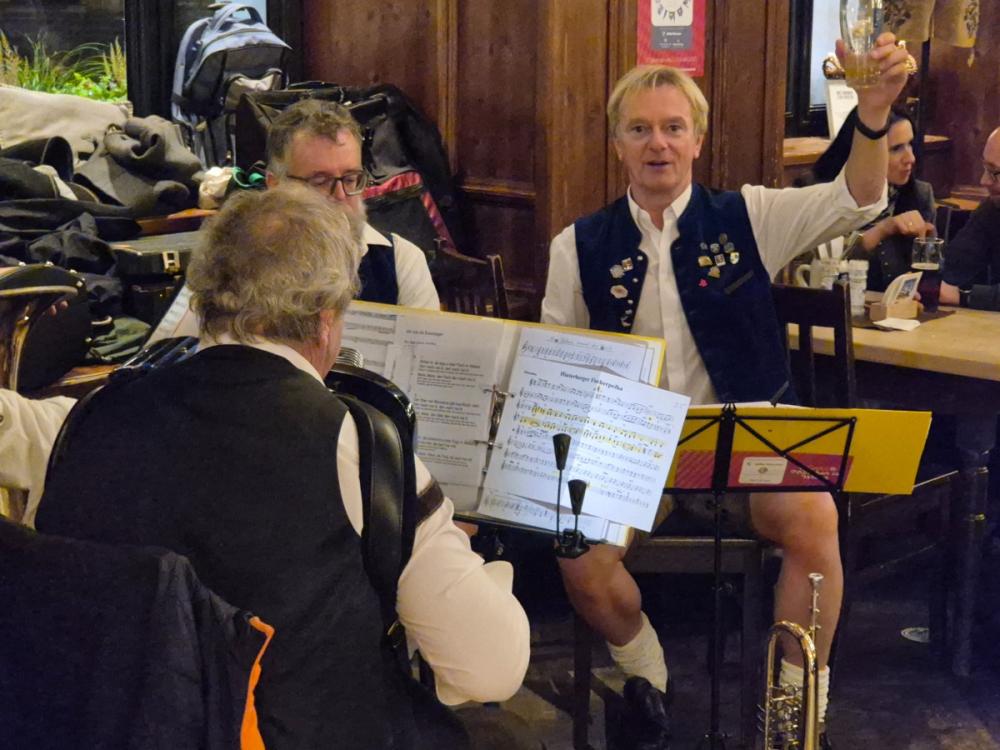
Oompah Oompah

A chilling message
The following day brought its own drama. After a fabulous breakfast—including Weisswurst, the Bavarian white sausage that is a regional delicacy, remembering, as one must, not to eat the skin—we set out into a crisp and genuinely sunny morning for a walk. Then our phones buzzed simultaneously: an alert warning of a terrorist threat in the vicinity of the Oktoberfest. It was quite chilling. Within the hour, the festival had been closed for most of the day. There had been an explosion nearby.
It was a sobering reminder of how quickly the texture of a trip can change and how irrelevant one's opinions about bier tents and tankards can suddenly seem. But it also, in its way, confirmed something the previous day had already begun to suggest: that the best of Munich lay not in the thing we had come to see, but in the places and people we had found along the way.
Also by Andrew Palmer...
Leeds Song Festival Looks Inward For 2027 – And Finds A World Of MusicClassical Music: Schmitt: Orchestral WorksClassical Music: Vaughan Williams A Sea SymphonyClassical Music: Marcel DupréClassical Music: Encores for Mr ScottsThe shortened address for this article is: newspub.uk/11ylk
More in this series...
Bucket List: Japan — Where the Trains Run on Time, the Sumo Runs Fast and the Wasabi Runs HotBucket List: Rio de Janeiro — Where 007 Pointed, and I FollowedLa Dolce Strada: Memories Of Italy In A Vintage RollsBucket List: Not A Destination, But An ExperienceBucket List Destinations: Do They Live Up To Expectations?