


search
date/time

Thu, 7:00AM
light rain
9.7°C
SW 18mph
light rain
9.7°C
SW 18mph
 | Sunrise | 5:07AM |
| Sunset | 7:13PM |  |

Steve Whitaker
Features Writer
@stevewhitaker1.bsky.social
P.ublished 4th February 2026
arts
The Severed Silence Of the Heart: Lode By Gillian Allnutt
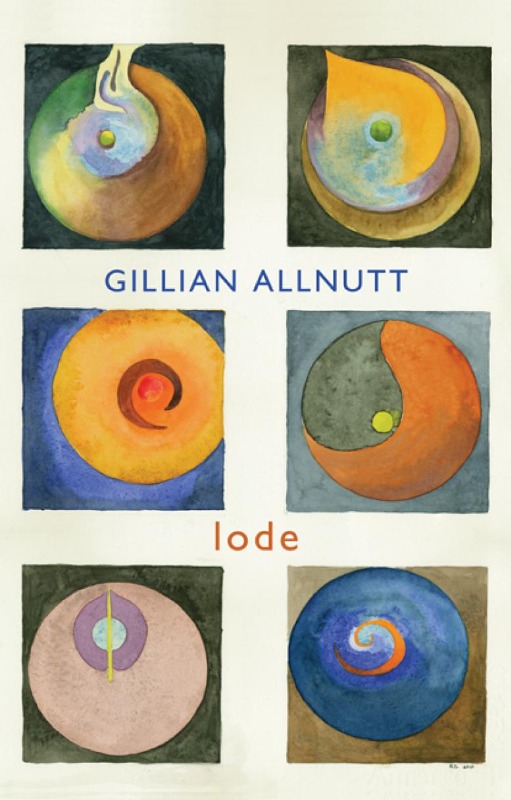
Nosing tentatively between delicacies of lyricism and meaning – Allnutts’s poems strive, if that is possible, for emotional recapitulation, for the grounding of moments of significance in a landscape of shifting markers. And she does so in a series of brush strokes whose impressionistic complexity need not occlude apprehension in its wake. A joy to read, her work, here divided into three distinct but indivisible sections, benefits from a second and third reading, if only for the relishment of her syntax and the sounds her word conjunctions yield.
In the context of the book’s ‘chapters’ – ‘Postwar’ deals with recalcitrant memory and history as hostage to the future, ‘Lockdown’ is a psychic disturbance actuated by a silent but cataclysmic shift in the gears of necessity, and ‘Earth-Hoard’ seeks hope in the iconography of natural restoration – ‘lode’ is a touchstone of equivalence, each of its interpretations an unseen ministry of recognition.
Heard, sometimes, in our instinct for performative tokenism, the lode may be a guide to ritual; in Allnutt’s necessarily succinct ‘To be honest’ it resides in the annals of collective fatuity, where the good intentions of the public in lockdown, like the ‘wasteful, weak, propitiatory flowers’ of Larkin’s hospital-goers, cannot disguise the bald facts of suffocation and death:
‘Truth – as we, foolish, applaud with saucepan and wooden spoon -
Is the ambulance standing alone in the back lane.’
The truth here is not negotiable, much as a moment’s reflection at the site of a civil war memorial fails to erase the clamour of the battlefield, whose lodestones are the buried voices of the dead:
‘Illegible the stone
memorial to
men
who in the civil war – and alway
for the sake of one side of the other -
battled over Gloucester.’
The poem from which this extract is taken – ‘Beechwood’ – is a rather beautiful meditation, whose final lines, as restful as quietus, draw an epitaphic veil over the earlier wordplay. Allnutt’s feeling for language, its disposition and seeking of sympathetic connections, is unmistakeably Hopkinsesque. Gently suggestive in a poem of studied uncertainty, her narrator finds an easeful accommodation, a sense of Hiraeth even, in the simple rendering of ‘To hart’s tongue / Home.’
The effect is much repeated elsewhere in Lode. The poem immediately following ‘Beechwood’ revels in its celebratory glory, reminding, again, of Hopkins in full astonished mood, as if the enduring, protective power of trees might best be captured in overwhelming figurative vigour. The sibilant rhythms of Allnutt’s description make of Ragspath Wood a place of anthropomorphic purpose and ecological necessity:
‘surely they will not fall short of great-heartedness
giving the shawl and the shroud of their shade for us
they will cover us
sharing not sentiment but soil and soul with us’ (‘of the trees in the wood by the old pit line’)
Allnutt’s use of sibilance, and of alliteration creates, beyond a natural harmony that caresses the ear, an uncanny inference of whispers and echoes. The depth of the poet’s affinity with the hinterland of Esh Winning, her Durham home, enables a sense of transcendence, a getting beyond the restrictions of the imposed lockdown in 2020: ‘no longer held / by the host and hostelry of world // too much with me.’ The alliterative ligature is subsequently untied, the process of release actuated in its softening as her narrator is absorbed into the Spring landscape:
‘though the hills are my familiars, call to me, call
as to the lambs. The light, alert
and growing - ‘ (‘The walk (allowed)’)
Consideration of the strange intangibility of ‘familiars’ – Heimat-present but, in this instance, dislocated by the irruption of Covid - is one of Allnutt’s tonal motifs across the collection. The feeling of being present whilst not being present, of being cohesively attached to memory whilst removed from its nostalgic excesses, creates an impasse over which the poet constructs scaffolds of imaginative reinvention. ‘Azuma Meditation’ crosses borders of perception in an astute reordering of experience(s) that persuasively blends the facsimile of Zoom communication with the tangible furniture of the first-hand – the breathless onomatopoeic train, the ‘basketful of eggs’ – to find little resolution to the lack of physical connection in this new world of separation. In the languid rhythms of doubt, the final, rhetorical, tercet answers its own question:
‘What did we gain or lose when we listened instead
to the breathing of trains - azuma, azuma -
paused on the viaduct?’
The picaresque journey of the tank in ‘Flame-thrower’, from Christmas Day table to the Normandy bocage of 1944, is both a symbol of the bitterness of the father-figure’s experiences, a harrowing metaphor for incendiary destruction, and a brilliant crossing of borders between documented historical events and a mediated familial landscape. The received effect is utterly compelling; as overtaken with the binary signifiers of fire as MacNeice – here the flames are immolatory, celebratory and purgatorial – Allnutt’s ambulant metre rolls inexorably across landscapes both war-torn and domestic:
‘Now plump electric lights, like fruits, adorn the Christmas tree.
No candle. Now his daughters watch him clean the half-remembered tank
fuel from beneath his fingernails. Before the meal he’ll make newspaper
rolls to start the coal fire in the postwar palace
parlour, where the poker with its ghost-blue flame
plugs in, whose provenance remains a secret.’
‘Mislaid’ amongst a welter of backlit memories, it is no surprise that the father’s presence is liminal, yielding a bricolage of disturbances, as if the only aide-de-memoire were tracing paper. His appearance in a poem as formally brittle as the inconsistency of emotional recall, is uncertain, at once painfully remote, and bitterly palpable:
‘In silence somehow he would ask me to forgive his suffering -
the shambles stilled, the crying shame of it.’ (‘My father, mislaid’)
The final part of Lode seeks comfort and a kind of certainty in the surety of provenance. Foregrounding the Earth-Hoard, our human connection with an underworld of totems and signifiers, of myth and natural heredity, Allnutt spins a kaleidoscopic narrative, expanded upon in an engaging glossary of notes whose eloquence falls necessarily short of the poet’s sense of abandonment to a greater purpose. Tracing the natural, and overwhelmingly powerful, maternal instinct to the potency of myth, ‘The Song of Arachnid’, pursues, like much of poet Rachel Bowers’ oeuvre, a lineage of protectiveness, love and continuity in a metaphor-replete, alliterative poem of circumlocution and resolve:
‘She is alone, the worn orb web of
The world. She’s woven into the wherewithal
Of her own imagination, her mantle
Of maternity.’
As seems fitting, the process of identification is completed in the concluding poem of Gillian Allnutt’s outstanding collection. ‘Sea Change’ transforms all that we know, all of our rubrics and constraints, into an imagined permanence, single calcified elements of a unified aeonic whole:
‘as if like them
you could become
Earth-hoard.’
More information here.