


search
date/time

Tue, 4:00AM
overcast clouds
15.9°C
WSW 8mph
overcast clouds
15.9°C
WSW 8mph
 | Sunrise | 3:47AM |
| Sunset | 8:43PM |  |
P.ublished 11th April 2026
nature
We Need To Reconsider Elephants In Zoos
By Chris Lewis, Born Free Foundation & Oxford Centre for Animal Ethics
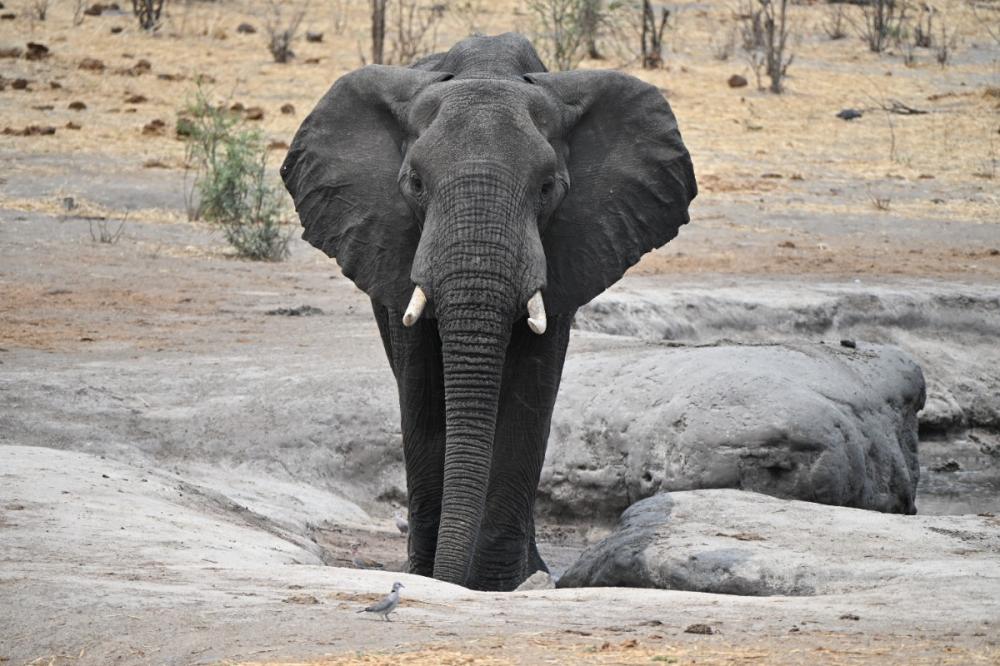
Elephant
Photo: Dawn Vose©
Concern for elephant welfare in UK zoos resulted in the establishment of the Elephant Welfare Group (EWG), which, in 2021, presented a report to the Zoos Expert Committee (ZEC) who are responsible for advising the UK government on matters relating to zoos. The findings of the EWG report are understood to have been considered during the creation of revised zoo standards for Great Britain, including whether the keeping of elephants in zoos should be phased out.
 M Dooley.JPG)
Photo: M Dooley©
Despite this recommendation, significant concerns persist for the welfare of elephants kept in UK zoos.
Elephants are not suited to living in zoos
Elephants are intelligent, highly social, and emotional beings, who form lifelong family bonds and mourn their dead. They navigate vast landscapes, remember watering holes from decades previously, and even show empathy toward other species.
Elephants range over vast distances, with home ranges of thousands of square kilometres being reported for African savanna elephants and hundreds of square kilometres for Asian elephants. The average enclosure size for elephants in UK zoos was reported to be 18,266m2 (0.018km2). Seven of the eleven zoos that held elephants during the period of the EWG’s 10-year study had enclosures smaller than the reported average. For perspective, of the ten zoos currently keeping elephants within the UK, eight have an enclosure which is smaller than their visitor car park. The EWG report identified that space in zoos “remains too small and too unvaried” for elephants to exhibit a full range of natural movements and behaviours.
Additionally, the report highlights that premature mortality and shortened lifespans remain “major problems” with those animals born into captivity suffering from an “atypically short lifespan”. Overall, the median lifespan of captive born individuals was found to be approximately 20 years and no elephants currently kept in zoos across Europe have reached the maximum ages seen in free-living elephants (75-80 years).
 Aaron Gekoski, Born Free.jpg)
For now, the keeping of elephants in UK zoos looks set to continue. With the publication of the revised zoo standards for Great Britain, zoos keeping elephants must increase their enclosures to a minimum of 20,000m2 which is still 700 times smaller than the smallest reported home range for wild elephants. Only three UK zoos currently meet this minimum requirement. Concerningly, zoos have been given 15 years to improve the space provided to their elephants, with a deadline of 2040. This means that there are elephants in UK zoos who could live in enclosures for another 15 years which have been deemed too small by the UK government.
Recommendations by the ZEC in response to the EWG report included establishing a formal process to examine the ethical complexities of keeping elephants in captivity, so that future decisions (whether continuation or phase-out) are informed by both scientific evidence and ethical debate.
It is only when we take a holistic approach to this issue that informed and rounded discussions can truly take place, and we can move towards a future where the betterment of individual elephants is at the forefront of policy decisions.

Chris Lewis
Web: www.oxfordanimalethics.com/home
Web: www.theanimalthing.com